

After-School Financial Foundations Series
Financial Education Before Predatory Systems Lock In
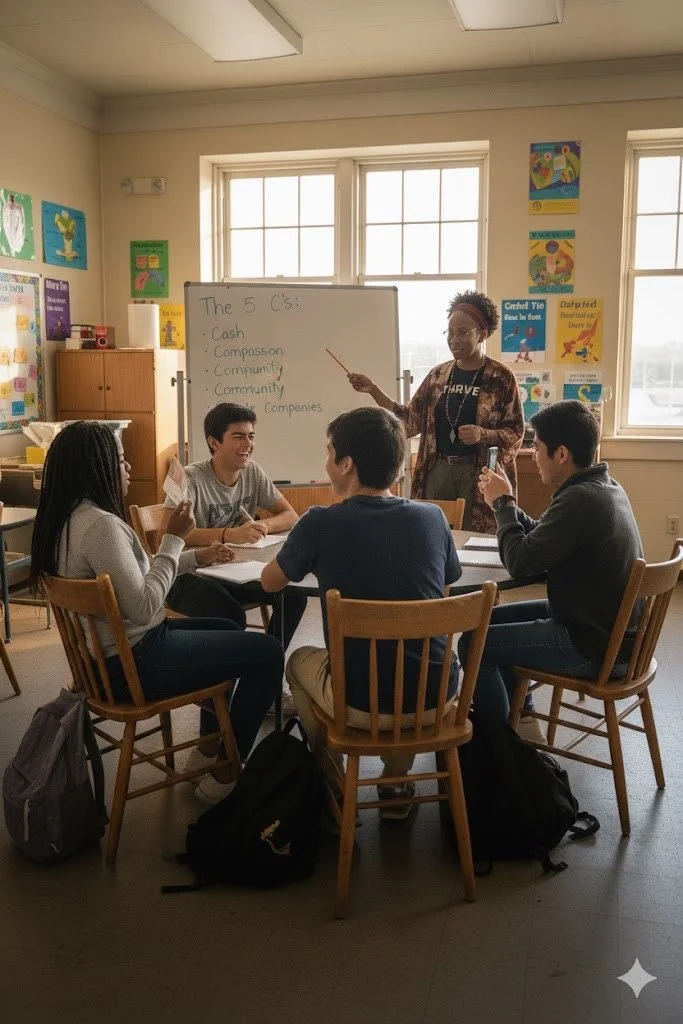
The After-School Financial Foundations Series is a structured financial literacy program designed for youth ages 14–18 at critical early decision points—before predatory financial messages, debt normalization, and harmful money beliefs become locked in.
By age 14, most teens have already absorbed messages that debt is normal, that they can't understand finance, that money problems are personal failures. This program interrupts those messages early, teaching young people how financial systems actually work, why those systems are designed for extraction, and how to protect themselves before making their first major financial decisions.
Delivered by TKI Foundation, operating as Thrive Wisely, this program provides uncompromised financial education that empowers youth to question what they're told about money—and make informed decisions when credit card offers, student loans, and predatory products come their way.
Thrive Wisely is based in Cleveland and Cuyahoga County, Ohio, serving after-school programs, youth organizations, and expanded learning providers throughout Northeast Ohio and through national partnerships.
Why Financial Education Must Start Early
Teenagers are targeted by financial products before they understand how those products work. Credit card companies market to high school students. Student loan debt begins accumulating at 17 or 18. Rent-to-own schemes, payday lending, and buy-now-pay-later products are designed to capture young people before they develop financial skepticism.
Traditional financial literacy programs teach youth to "save money" and "avoid debt" without explaining why the system makes saving nearly impossible for many families, or how debt products are specifically designed to trap young people in cycles of extraction.
This program teaches youth to question financial messaging, recognize predatory practices, understand how credit and interest actually work, and build the confidence to make financial decisions based on knowledge rather than marketing or fear.
This program is especially effective for youth from underserved communities, first-generation students preparing for college, teens entering the workforce for the first time, and young people whose families lack financial literacy resources to guide them.
Who This Program Serves
Youth ages 14–18
After-school program participants
Boys & Girls Clubs and youth organizations
Expanded learning and summer enrichment programs
School-based partnerships
Youth workforce preparation programs
Community center youth programming
Organizations implement this program through after-school and expanded learning initiatives, youth-serving nonprofits, summer programs, school partnerships, and community-based youth development programs.